
Announcing our Spring 2026 cohort
.jpg)
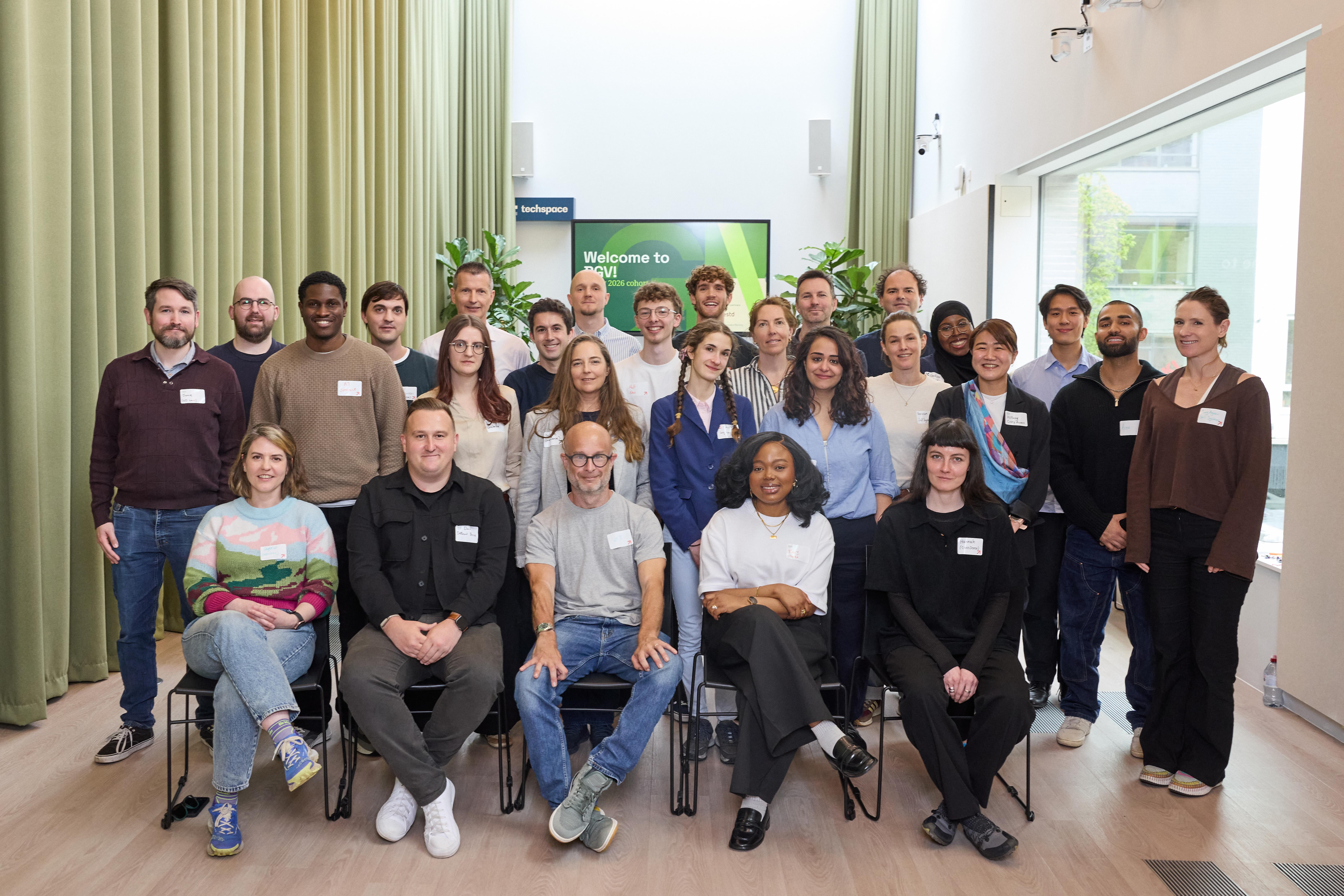
We're excited to introduce the 12 startups joining the BGV portfolio as part of the Spring 2026 Tech for Good programme, selected from over 460 applications.
What stood out about this group wasn't just the quality of the ideas, it was how close the founders are to the problems they're addressing. Several are clinicians and scientists, who've spent years inside the systems they're now trying to change. Others are building for communities they belong to: disabled fans at live events, Parkinson’s patients, and families drowning in household admin. At BGV, we believe that those who truly understand the problem they’re solving are more likely to succeed, and we couldn’t be more proud to support this cohort as they start scaling.
We're also delighted to be partnering with Vestd and HSBC Innovation Banking on this programme, giving founders access to expert support and an operational platform to grow their ventures.
Cerebella
Healthy Lives | Dr Nahid Zokaei, Lily Mainstone-Cotton
Menopause-related neurological symptoms, including brain fog, anxiety and memory lapses, affect more than 80% of women during midlife, yet remain largely unaddressed by clinical care. This gap in care contributes to £1.8bn in lost GDP and 1 in 10 women leaving the workforce each year. Cerebella expands access to midline brain health support thorugh a digital platform offering self-administered cognitive assessments and personalised, evidence-based interventions, reaching both healthcare and workplace settings without requiring clinician time.
Cicely
Inclusive Society | Khadijah Ajala, Nuzzat Chowdhury, Polina Markova
Higher education environments are designed around uniform navigation, disadvantaging students who are neurodivergent, deaf or disabled. Despite UK universities spending an estimated £2bn annually on estates, accessibility data remains static: audits costing £50–100k become outdated quickly, leaving students with unexpected gaps in provision. Cicely replaces periodic audits with continuous feedback through a real-time campus space rating platform, reducing cognitive load and physical barriers for students.
CrossSense
Healthy Lives | Szczepan Orlins, Harry Robbins, Hannah Blows, Isabelle Strauss
Dementia affects around 1 million people in the UK, progressively eroding their ability to perform everyday tasks and undermining personal autonomy. Most existing technology focuses on surveillance and monitoring rather than restoring the functional independence the condition takes away. CrossSense takes a different approach: lightweight AR smartglasses paired with a privacy-first AI application that delivers contextual cues and conversational support, helping people in early to mid-stage dementia stay independent for longer.
Day2 Health
Healthy Lives | Matt Ross, Ed Shaw
Parkinson's costs the NHS an estimated £728M annually, and while evidence strongly supports lifestyle interventions, structured access to these remains out of reach for most patients once they leave the clinic. This leaves many lacking the tools to manage progression effectively, compounding long-term health outcomes and healthcare system costs. Day2 Health delivers personalised AI coaching across movement, nutrition, sleep and social connection, helping Parkinson's patients manage symptoms day-to-day alongside their clinical care.
Deconvolvr
Healthy Lives | Dr Axel Thomson, Dr Mark Preston
Prostate cancer is the most common cancer in men in the UK, with around 64,000 diagnoses and 12,000 deaths each year. Yet, current diagnostic tools make it difficult to reliably distinguish patients who need immediate, life-saving intervention from those who can safely avoid treatment. Deconvolvr develops bioinformatic software that separates cancer, stromal and immune cell signals within biopsy samples, revealing molecular signatures that existing tests miss and helping clinicians make more precise treatment decisions.
Different Breed
Inclusive Society | Craig Pryde, Daniel Cook
79% of disabled fans are deterred from live events by inadequate accessibility information, yet venues lack tools to provide it at scale. As the European Accessibility Act 2025 raises compliance standards, what was once a reputational concern has become a significant financial and legal liability. Different Breed’s platform creates personalised, dynamic Fan Guides enabling fans to self-serve according to their individual needs, reducing venue support costs, increasing attendance and surfacing valuable audience data.
HEURIS
Healthy Lives | Dr Anse Arif, Dr George Khalil
Diagnostic error affects around 20% of clinical encounters and accounts for an estimated 17.5% of total healthcare expenditure. Emergency Departments are one of the most vulnerable, where time pressure and cognitive overload push clinicians towards premature conclusions. HEURIS addresses diagnostic uncertainty in high-risk clinical settings by providing a reasoning support tool that reviews clinician assessment input, highlights overlooked features or potential diagnoses, and updates diagnostic probabilities in real time.
ND Lens
Healthy Lives | Jamie Tidman, Ingrid Folland, Dr Mike Smith
More than half a million people in the UK are waiting for an ADHD assessment, with some facing delays of up to eight years. The bottleneck is largely structural: services still rely on paper-based questionnaires and repetitive admin that limit clinician capacity and contribute to burnout. ND Lens improves traditional processes through structured digital workflows, using AI to analyse responses and interview transcripts against ICD-11 and DSM-5 criteria and supporting clinicians in drafting fully cited reports.
Novi Innovations
Inclusive Society | Nadav Jacobs, Matt Stewart, Louis Chow, Lucas Chow
Smartphone overuse is linked to growing attention deficits, with an estimated 41% of teenagers spending over eight hours a day on screens. Existing solutions are either ineffective or introduce new risks: blanket bans endanger children reliant on app-based glucose monitors, while hardware alternatives like Yondr pouches cost schools around £20,000 a year. Novi Innovations restricts access to non-approved apps at school entry, keeps medical apps and emergency calls always accessible, and gives teachers a live dashboard to monitor compliance.
Soil Systems
Sustainable Planet | Amy Agnew, Emily Benson, Rosie Wesemann, Vanessa Stockley
The agricultural sector remains dependent on synthetic fertilisers that degrade soil, yet the food system landfills 1.05 billion tonnes of food annually, much of it nutrient-rich organic material. Meanwhile, the hospitality sector generates significant organic waste, but lacks the infrastructure to collect, process and reintegrate it at scale. Soil Systems is building a circular platform combining a waste collection interface for hospitality partners with a traceability system, enabling scalable organic fertiliser production with measurable environmental impact.
Spondle
Inclusive Society | Folasade Ajayi-John, Ayomide Ajayi-John
Household administration represents a systemic inefficiency largely ignored by technological innovation. Women report doing 36 hours of household admin per week, nine hours more than men. This gap limits career progres and has a negative impact on wellbeing. Spondle is an AI-powered household organiser that automates the sorting, assignment and reminders of household responsibilities, learning each family's patterns to reduce the cognitive load of running a home.
VÖRNTEC
Sustainable Planet | Marco Zaratiegui, Matias Puszyvieski
The IEA estimates that energy-related methane emissions globally is about 80% higher than the total reported, a gap equivalent to the CO2 output of 3.6 million petrol cars per operator. The data needed to close this gap already exists within standard SCADA systems but remains unanalysed. VÖRNTEC’s AI platform leverages existing data to predict failures and detect leaks in real time, enabling operators to reduce methane emissions at a fraction of the cost of traditional monitoring tools.
Diversity of our Spring 2026 cohort
- 45% of founders identify as women, 55% as men.
- 25% are mixed-gendered teams, 25% are all-women teams, and 50% all-men teams.
- 50% of companies are based outside London.
- 65% of founders identify as ‘White’, 10% as Black, 10% as Asian, 13% with mixed or multiple ethnic backgrounds.
- 16% of founders identify as having a disability.
- Founders of this cohort span 10 different nationalities.
Applications for our Autumn Tech for Good programme launch in May. If you're considering joining, apply to speak to a member of the BGV team about your tech for good venture to discuss if it's a good fit, or join our upcoming events to find out more about BGV.
You might also like
Meet the J-StarX Impact UK accelerator cohort
We're excited to announce the teams selected for the first J-StarX Impact UK accelerator.
Announcing our Autumn 2026 cohort
12 exciting tech for good companies are joining the Autumn 2026 cohort.
Credit scoring for the financially excluded: Why we invested in Noggin HQ
We are really excited to announce that we’ve invested in Noggin HQ’s seed round, led by Blackfinch Ventures, alongside Oxford Capital and notable angels.
Launching the J-Star X UK Impact Accelerator
We’re incredibly excited to announce the launch of a new acceleration programme to support Japanese impact-driven startups to scale into the UK and European markets.
